


A Complete Guide to Product Feedback Management With Teptro

A Complete Guide to Product Feedback Management With Teptro
Today, business organisations are no longer competing based on the number of features they introduce to the market, but rather compete based on the kind of features they have for the market. Customers are the active participants in the development of digital products, and their experience on the ground is likely to reveal any gaps, which are commonly overlooked by internal teams. This change has transformed product feedback management into the operational backbone of fast-growing companies.
The current SaaS software, mobile apps, B2B platforms, and enterprise solutions work in competitive environments where customer expectations change on a monthly basis. When a business fails to explain the reasons why users are leaving, what is slowing their workflow, or what they want to see next, competitors are quick to pick up the margin.
That is why nowadays companies use user feedback software not only to gather opinions, but also to drive strategic decisions. Feedback is a predictable control system when used in the right ways, and teaches the teams what to make better, what to create and what to avoid.
What Product Feedback Truly Means
A significant number of business owners consider feedback as a list of demands or requirements. As a matter of fact, product feedback is the data of user behaviour, decision-making trends, and unfulfilled needs. It is responding to more philosophical questions, like:
- Why are customers using only 30% of your features?
- What makes them choose a competitor even after a demo?
- Which parts of the product slow down their workflow?
- What prevents them from upgrading or renewing?
- Understanding these patterns requires a methodical approach.
A modern user feedback software converts unprocessed data into signals that are relevant by:
Capturing feedback from multiple touchpoints
Identifying the user’s context and intent
Connecting feedback with roadmap planning
Storing historical insights for future reference
It is not only about what a customer says, but it is also about knowing the logic behind each decision a customer makes. This results in feedback management being created as a sustained intelligence coating, which propels sustainable product growth.
The Hidden Cost of Ignoring Structured Feedback
Informal feedback can be gathered through many startups in the form of support chats, WhatsApp, Google Sheets, internal Slack messages, and even unrecorded customer calls. This initially appears to be under control. However, the cracks become evident with the growth of the business.
Here are the hidden costs:
1. Unintentional feature bias
Teams have a tendency to pay attention to the loudest voice—a client who is emphatic or an overly passionate internal stakeholder—when factual data is lacking.
2. Delayed product growth
With non-centralised feedback, it takes weeks before insights reach product teams, making it slower to release and less competitive.
3. Lack of alignment
The support, sales, product and leadership divisions tend to make decisions based on varying sources of information, and they end up creating conflicting expectations and duplication of conversations.
4. Poor customer retention
When customers lack assurance that their feedback is heard, they cease to provide this feedback. They eventually fly away quietly, and it becomes hard to proactively rectify problems in teams.
5. No historical reference
The loss of older conversations makes the companies unable to trace the evolution of the user requirements through time, which is one of the most important aspects of long-term development.
When the companies implement the structured workflow and are backed by specific tools, these issues are lost.
Why Smart Teams Are Switching to User Feedback Software
Current user feedback software not only retains suggestions, but creates an active layer of intelligence throughout the product life cycle.
The following is how it changes the business owner's operations and startup teams:
Centralised Intelligence Hub
All NPS responses, feature requests, bug reports, usage issues, demo commentary, and community insight are automatically consolidated in one searchable dashboard. Memories and fragmented files are no longer used by teams.
Priority Scoring with Real Context
The tool clusters similar feedback, determines user segments behind every request and presents how frequently an issue can impact revenue, retention, or product adoption.
Smoother Roadmap Alignment
Product roadmap software can be linked to feedback, so the next releases are not based on assumptions, including customer priorities.
Executable Documentation
Team members can convert raw insight into easily consumable specifications, acceptance criteria, and internal documentation (using the tools provided).
Transparent Customer Communication
All team members working on the customer's request keep the customer updated on their efforts, allowing customers to feel engaged and develop increased trust in the process. Increased trust leads to more loyal customers long-term.
Faster Experimentation
By providing real-time signals and trends, startups can run rapid investigations and test concepts in a more timely manner. Startups can avoid building features that nobody wants or needs.
Startups using feedback to improve their everyday processes can reduce the risk of failure, stay relevant, and grow at an accelerated rate.
A Practical Framework for Building a Feedback-Driven Product Culture
No matter how good a tool is, a company will not be successful unless there is also a well-structured workflow in place. Below is a tested and proven workflow used by many of the top-performing product-led companies:
Step 1: Capture Contextual Feedback
Get insights directly from the point of user behaviour, rather than after the fact. The best way to do this is through the application's use of widgets, guided navigation flows, interactions with support, and micro-surveys. Choosing to capture contextual feedback will produce data with much more precision than using generic feedback forms.
Step 2: Segment Feedback Based on User Intent
Segmenting feedback based on user motivation will produce much more useful data than segregating based on demographic data.
For example:
I am completing tasks faster.
I cannot find a specific feature.
I am looking for more customisation options.
By examining your customers’ intent, you will provide further richness to your analysis.
You May Also Like: How to Utilize Customer Feedback to Craft Personalized Customer Experiences
Step 3: Identify Signals, Not Noise
Not every customer request is a valid signal; the best customer feedback software effectively identifies patterns that reflect actual demand, rather than isolated opinions.
Step 4: Prioritise Using a Shared Framework
Use a scoring system that takes into account how often it is requested, what value it provides to customers, the business impact it will have, and how difficult it will be to implement. This way, your prioritisation process does not rely on any subjective opinions.
Step 5: Convert Selected Insights into Roadmap Items
Connect the insights to the product roadmap through your product roadmap software so that product, engineering, marketing, and leadership teams all know what to expect.
Step 6: Document Insights for Execution
Use product documentation software to capture the context surrounding each insight, including the definition of the problem, what you expect will happen, where to find the original feedback associated with each insight, and any technical notes related to the insight.
Step 7: Close the Loop
Communication is to close the loop and inform your customers of the outcomes—accepted, rejected, in progress, or exported. Closing the loop increases customer loyalty and retention significantly.
The complete cycle of closing the loop and informing your customers about how you closed the loop is what differentiates reactive teams from truly product-led organisations.
Conclusion: Teptro—Your End-to-End Platform for Smarter Product Decisions
Product feedback management has gone from being an option to being an essential strategic capability for the business. It impacts product adoption, retention, the lifetime value of a customer, and competitive market sharing. By taking the time to successfully treat feedback management as a structured and repeatable process, the business can perform better than those companies that continue to rely on gut feeling or data sources.
These are some things that we all need to be doing to create products that will have a positive impact on our customers' lives. It provides a full solution if you want to create goods that will provide clients with genuine, long-lasting value and enable you to make smarter decisions about their future as well as the future of your own business.
You May Also Like: How Product Roadmap Software Turn Business Strategies into Real Results
Frequently Asked Questions
1. What is product feedback management?
Product feedback management refers to the act of gathering, interpreting and responding to customer feedback in order to enhance product decisions, functionality, and user experience.
2. Why should startups use user feedback software?
To structure insights, focus on improvements, decrease guesswork, and create products that resonate with the actual customer expectations, startups require user feedback software.
3. How does Teptro help in feedback prioritisation?
The Teptro gathers similar feedback, emphasises the recurrent requests, gives importance ratings, and assists teams to find high-value improvements at an accelerated pace and with precision.
4. Can feedback directly connect to product roadmaps?
Yes, Teptro connects feedback to the product roadmaps, allowing for planning smoothly, prioritising and ensuring greater cooperation between the product and development teams.
5. How does Teptro improve customer satisfaction?
Teptro helps form the feedback circle by admitting that input is received, providing updates on progress and demonstrating to the customers that their feedback actually makes a difference in product development decisions.
Want to collect feedback from different channels?

If yes, Then Explore Antrika Features -



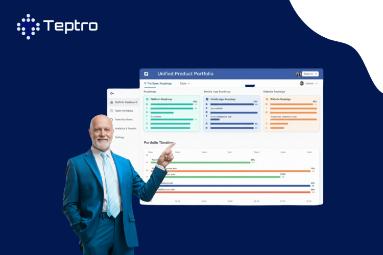



Discover, Learn & Build Better with Teptro
From feedback to product planning—Teptro helps you simplify your journey.